Genres
Movie Overview & Analysis
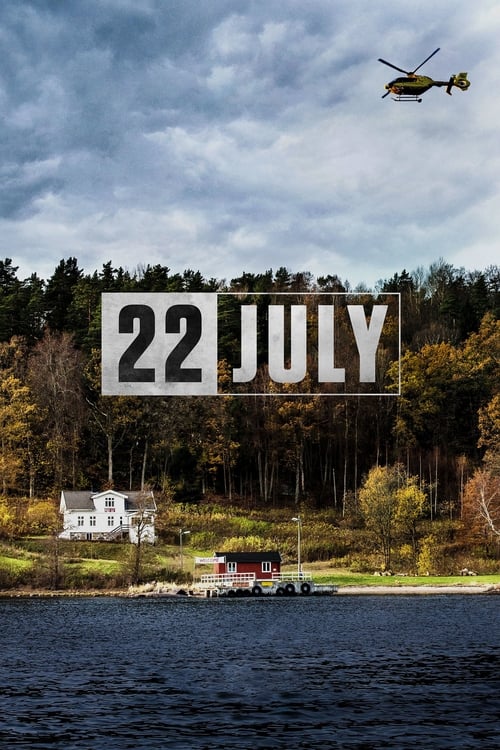
22 July tackles a harrowing chapter in Norway's history, focusing on the brutal attack by Anders Behring Breivik. While it's commendable for shedding light on the aftermath, it sometimes gets lost in its own pacing.
Valuable Insights, but Flawed Execution
22 July offers a raw and impactful look at a national tragedy, though it could benefit from tighter pacing and deeper character exploration. It's an important film but not without its flaws, making it a suitable watch for those prepared for its somber tone.
Film DNA
The radar scores indicate a film with decent storytelling and emotional weight but hampered by pacing issues and limited rewatch appeal. Its visual impact is average, reinforcing its narrative but not elevating it.
Pros
- Strong lead performance by Jonas Strand Gravli
- Realistic portrayal of a national tragedy
Cons
- Pacing issues, especially in courtroom scenes
- Underdeveloped supporting characters
A Challenging Watch for Many
This film is firmly aimed at those interested in true crime dramas and historical retellings that unpack societal trauma. It might resonate with audiences looking for a serious reflection on violence and its repercussions. However, those seeking light-hearted fare or fast-paced action will likely find 22 July excruciatingly slow and emotionally taxing. The film’s heavy themes, combined with its deliberate pacing, can make it a challenging watch for casual viewers.
A Tragic Day in Norway
The film unfolds in three distinct parts, exploring the tragic events of July 22, 2011, when neo-Nazi Anders Behring Breivik carried out a massacre at a Labour Party Youth Camp on Utøya Island, killing 77 young individuals. It follows the survivors grappling with trauma, the political response from Norway's leadership, and the ensuing legal proceedings against Breivik. By intertwining personal and political narratives, the film paints a picture of resilience amidst tragedy. However, the pacing can feel uneven, especially in the courtroom scenes, which tend to drag on and lose emotional impact.
Mixed Performances in a Heavy Narrative
Jonas Strand Gravli delivers a standout performance as Viljar Hanssen, one of the survivors trying to reclaim his life after the attack. His portrayal is authentic and emotionally charged. On the other hand, Anders Danielsen Lie's portrayal of Breivik feels one-dimensional, failing to provide any deeper understanding of his motivations, which was a missed opportunity. Supporting characters, while competent, often feel underutilized, making it hard to connect with their individual stories amidst the larger narrative. This imbalance slightly detracts from the overall emotional weight of the film.
Realism Meets Pacing Problems
Paul Greengrass's direction is typically solid, marked by a documentary-like realism that suits the film's serious subject matter. He employs hand-held camera work to create a sense of immediacy, especially during the attack sequences. However, the visual choices sometimes border on chaotic, leaving viewers disoriented rather than engaged. The courtroom scenes, in contrast, are shot with a more static and methodical approach, which works against the pacing and may leave viewers restless. The film's visual style, while gritty, occasionally undercuts its emotional resonance.
Heavy Lifting, Emotional Toll
Watching 22 July is a mixed experience; it often feels heavy with its weighty subject matter, yet it can also slip into moments of frustrating boredom. The emotional highs are powerful, especially in depicting the survivors’ struggles, but prolonged courtroom scenes risk numbing the audience's engagement. Those moments meant to provoke reflection sometimes drag, making the film feel unnecessarily stretched. It’s a tough watch that demands attention, but it can test your patience with its slower sections, leaving some viewers feeling drained rather than reflective.
Watch if you liked: United 93, The Baader Meinhof Complex



No comments yet. Be the first to share your thoughts!