Genres
Movie Overview & Analysis
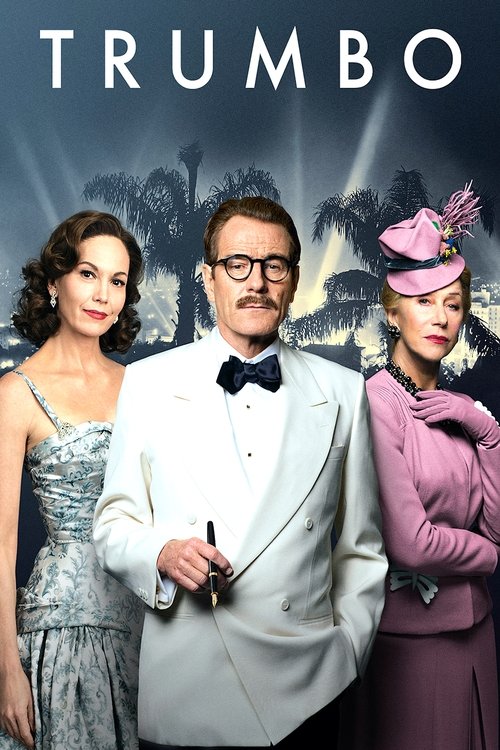
Trumbo takes a look at the tumultuous life of screenwriter Dalton Trumbo during the McCarthy era. While it has strong moments, it often feels like it's playing it safe.
Set against the backdrop of 1940s Hollywood, 'Trumbo' follows the life of Dalton Trumbo, a talented screenwriter who found himself blacklisted due to his refusal to cooperate with the House Un-American Activities Committee. The film highlights his struggles amid political hysteria and explores his relationships with family, friends, and fellow artists. As Trumbo tries to navigate this hostile landscape, he turns to penning scripts under pseudonyms and working in secret, all while fighting for his right to create. The story unfolds within a broader commentary on censorship and the impact of political agendas on artistic expression, culminating in a tale of resilience against adversity.
Bryan Cranston delivers a solid performance as Dalton Trumbo, embodying the tenacity and wit of a man caught in a political storm. His portrayal is charismatic and engaging, though at times it leans too heavily on his well-known persona. Supporting performances from actors like Diane Lane as Cleo Trumbo and John Goodman as Frank King add depth to the narrative, though several characters, such as Louis C.K.'s Arlen Hird, feel underdeveloped and could have contributed more to the overall story. The ensemble cast has moments of chemistry, but a few characters are left feeling one-dimensional, which detracts from the richness of the narrative.
Jay Roach's direction captures the essence of the period, using a mix of vibrant colors and vintage aesthetics to evoke the feel of old Hollywood. However, the pacing often drags, particularly in the second act, where the film gets bogged down in exposition rather than driving the story forward. The visual style feels polished but at times lacks the grit that the subject matter could have benefitted from. There are moments of clever editing and some compelling sequences, but other scenes come off as too clean and safe, missing opportunities to depict the darker elements of the blacklist effectively.
While 'Trumbo' offers some engaging and tense moments, it occasionally falls flat. The emotional weight can feel diluted, especially when the film prioritizes its historical context over personal stakes. While the drama of censorship and struggle is inherently powerful, certain sequences drag on, leading to moments of boredom. Some scenes attempt to inject humor, but they often miss the mark, leaving the viewer feeling disconnected from Trumbo's plight. The film shows promise but struggles to maintain a consistent emotional rhythm, oscillating between highs and lows without digging deep enough into its central conflicts.
'Trumbo' is likely to appeal to viewers interested in Hollywood history, political dramas, and biopics, especially those who appreciate a good underdog story. However, those who prefer action-packed or fast-paced films might find it tedious due to its slower tempo and dialogue-heavy scenes. It’s not a film for those looking for a light escape; instead, it invites contemplation on censorship and creativity. Audiences seeking a more intense or thrilling experience may walk away disappointed, as the film primarily focuses on character-driven drama rather than external conflict.
'Trumbo' is a commendable depiction of an important chapter in Hollywood history, featuring strong performances and a relevant message. Though it stumbles in pacing at times, it ultimately manages to resonate on several levels, making it worth a watch for history buffs or fans of the genre.
Film DNA
The radar scores reflect a film that offers a solid story with decent emotional weight but falls short on rewatchability due to pacing and some underdeveloped characters.
No comments yet. Be the first to share your thoughts!