Genres
Movie Overview & Analysis
Looper is a sci-fi film that plays with time travel and moral dilemmas but doesn’t quite stick the landing. Rian Johnson's vision is ambitious, yet it stumbles in execution, leaving viewers pondering if it could have been more.
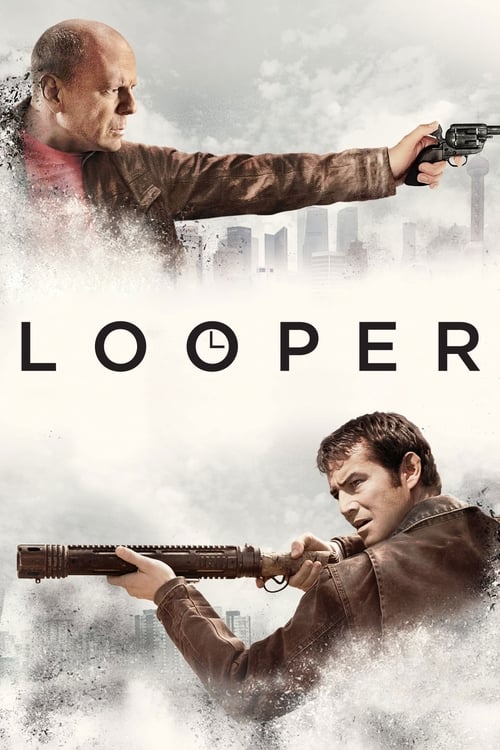
Set in a dystopian 2044, 'Looper' centers on Joe, a hitman responsible for eliminating targets sent back in time by a mob operating in the future. Played by Joseph Gordon-Levitt in his youth and Bruce Willis as his older self, Joe's life takes a turn when he is tasked with killing his older self, leading to a series of events that challenge his morality and purpose. As both Joes navigate this tangled timeline, they confront themes of fate, choices, and the implications of their actions. The story intertwines thriller elements with sci-fi concepts, creating a narrative that feels familiar yet intriguing.
Joseph Gordon-Levitt excels in portraying the younger version of Joe, successfully embodying both swagger and vulnerability. Bruce Willis, on the other hand, delivers a solid performance, but the character feels a bit underdeveloped as the older Joe. Emily Blunt, as Sara, provides a strong presence but her character arc feels somewhat forced, as if the script struggled to fully flesh it out. Supporting characters like Paul Dano’s Seth are intriguing but ultimately feel like missed opportunities, as their potential is overshadowed by the film's focus on the main duo. Overall, while the performances are commendable, some characters fall short of leaving a lasting impression.
Rian Johnson's direction in 'Looper' is visually striking, marked by a gritty aesthetic that complements its dystopian themes. The use of practical effects over CGI gives the film a grounded feel, enhancing its tension. However, the pacing is uneven; some sequences drag on, making the movie feel longer than its 118-minute runtime. The time travel mechanics are intriguing but often lead to convoluted plot points that challenge the viewer’s engagement. Overall, Johnson's style is distinctive, but the overcomplicated narrative detracts from its visual appeal. The cinematography captures a bleak, yet fascinating world that echoes the film's themes.
Watching 'Looper' feels like an emotional tug-of-war, with moments of gripping tension diluted by slower scenes that test your patience. The film tries to engage with deep themes of regret and redemption, yet occasionally meanders into convoluted plots that can frustrate. There are high-stakes moments that could evoke genuine feelings, but they are often sidetracked by unnecessary exposition. This uneven emotional landscape leaves viewers occasionally bored and scratching their heads, wondering if the film's various threads will ever cohesively come together. In its attempts to provoke thought, it sometimes loses the emotional connection it strives to establish.
Fans of sci-fi thrillers who appreciate intricate plots and moral quandaries will likely find 'Looper' appealing. However, viewers who prefer straightforward narratives or are turned off by existential themes may find it tedious. The film's complexity and somewhat bleak outlook on life might not resonate with everyone, particularly those looking for a light, action-packed experience. Additionally, audiences expecting a traditional time travel romp may be disappointed by its darker themes and slower pacing. Ultimately, this film is tailored for those who enjoy wrestling with complicated ideas rather than just enjoying a simple ride.
'Looper' has a solid foundation with its innovative premise and strong performances, but it ultimately stumbles over its pacing and overly complex narrative. While it offers intriguing concepts, the film leaves you wanting a clearer, more cohesive storytelling experience.
Film DNA
The radar scores reflect a film with strong visuals and an original premise but lacking in emotional depth and consistent entertainment value.
No comments yet. Be the first to share your thoughts!