Genres
Movie Overview & Analysis
Ida is a film that grapples with identity and secrets in post-war Poland. While it succeeds in its stark visuals and thematic depth, it occasionally falters in pacing.
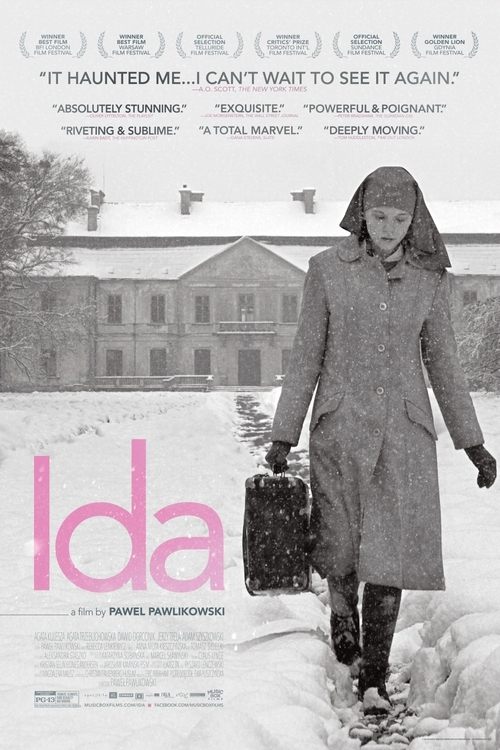
Set in the early 1960s, 'Ida' follows a young novitiate named Anna, played by Agata Trzebuchowska, who is on the cusp of taking her religious vows. Her life takes a turn when she uncovers a dark family secret linked to her Jewish heritage during the German occupation. Joined by her estranged aunt Wanda, portrayed by Agata Kulesza, Anna embarks on a journey to understand her past. The film sheds light on the intersecting issues of faith, loss, and the haunting legacy of war as Anna navigates her identity amid Poland's tumultuous history.
The performances in 'Ida' are solid, with Agata Kulesza delivering a particularly powerful portrayal of the hardened yet vulnerable Wanda. However, Agata Trzebuchowska's Anna feels somewhat underwritten; her character's development is often overshadowed by Wanda's more vibrant presence. Some supporting characters, such as Szymon (Jerzy Trela), feel like mere plot devices rather than fully realized individuals. While the primary duo is effective, the supporting cast doesn’t quite manage to leave a lasting impact, which is a missed opportunity given the rich backdrop of their shared history.
Pawel Pawlikowski's direction emphasizes the starkness of post-war Poland through its black-and-white cinematography, creating a hauntingly beautiful aesthetic. The use of natural light and carefully composed frames adds a touch of elegance, yet there are moments where the pacing feels sluggish, and some scenes drag on longer than necessary. The visual style is striking, but it can also lead to a sense of detachment from the story. The film often opts for silence over dialogue, which can enhance the atmosphere but also occasionally feels like it stalls the narrative.
Watching 'Ida' evokes a mix of introspection and frustration. While the film does well in conveying the weight of Anna's discoveries, there are stretches where the narrative feels slow, risking viewer engagement. Moments of silence linger heavily, leading some viewers to feel disconnected rather than drawn into the emotional core. The film's exploration of complex themes is commendable, but the pacing and minimal dialogue can lead to moments of boredom, challenging the audience's patience as they await the next plot progression.
This film is tailored for viewers who appreciate slow-burn dramas and reflective storytelling. Fans of art-house cinema will likely find 'Ida' a rewarding experience. However, those who prefer fast-paced narratives or are looking for traditional entertainment might find it exasperating. Its heavy themes and deliberate pacing will not resonate with everyone, making it a niche offering that requires a certain mindset to be fully appreciated.
'Ida' is a thoughtful exploration of identity and history, packed within a visually arresting package. While it has its pacing issues, the performances and themes are enough to make it a worthwhile watch for those willing to engage with its quieter moments.
Film DNA
The scores reflect a film rich in visual style and thematic depth but hindered by pacing issues that may challenge some audiences. It's certainly engaging but not universally entertaining.
No comments yet. Be the first to share your thoughts!