Genres
Movie Overview & Analysis
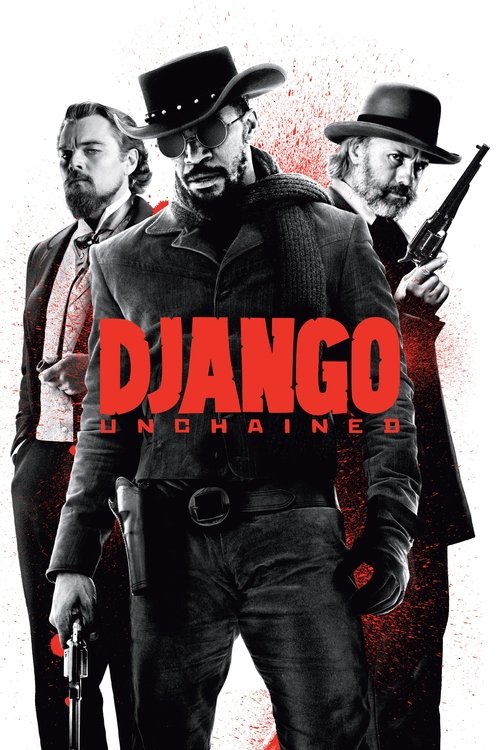
Django Unchained is another Quentin Tarantino film that mixes excessive violence with sharp dialogue. While it offers a unique take on the Western genre, some parts feel drawn out and self-indulgent.
Set in the pre-Civil War South, Django Unchained follows Django Freeman, a freed slave who teams up with a German bounty hunter, Dr. King Schultz. Schultz is on a mission to capture a ruthless gang of criminals and offers Django a valuable deal: his freedom in exchange for help locating and rescuing his wife, Broomhilda. As they navigate the treacherous landscape of slave plantations and the heinous brutality of white supremacy, Django evolves from a passive victim into a vengeance-seeking hero. The film unfolds with a blend of dark humor and intense action, reflecting Tarantino’s signature style while highlighting the harsh realities of slavery.
The performances in Django Unchained are generally strong, particularly Christoph Waltz as Dr. King Schultz, who balances charm and menace effectively. Jamie Foxx delivers a solid performance as Django, showcasing his transformation from slave to avenger. However, Leonardo DiCaprio's portrayal of the sadistic Calvin Candie can feel over-the-top at times, risking the integrity of the character with excessive theatrics. Kerry Washington is underutilized as Broomhilda, often sidelined during crucial moments, which detracts from the emotional stakes of her character’s plight. Samuel L. Jackson as Stephen provides a complex foil but occasionally veers into caricature.
Tarantino’s direction in Django Unchained is unmistakably stylish, marked by striking cinematography and an eclectic soundtrack that meshes well with the narrative. The landscapes of the South are beautifully captured, juxtaposing the brutal subject matter with stunning visuals. However, some scenes drag on longer than necessary, creating pacing issues that disrupt the film’s overall momentum. While Tarantino effectively uses slow-motion sequences and sudden bursts of violence to punctuate, the indulgence in these stylistic choices can sometimes feel like a crutch rather than a strength.
Watching Django Unchained can be a mixed experience. While the film certainly delivers some electrifying moments and sharp dialogue, there are stretches where the pacing falters, leading to moments of impatience. The violence, while often stylized, can be jarring and may overshadow the emotional core of the story. Some viewers may find themselves emotionally drained rather than invested by the time the film reaches its climax, as it occasionally prioritizes style over substance. Yet, there are poignant themes of freedom and revenge that offer some emotional weight.
Django Unchained is tailored for fans of Quentin Tarantino’s unique brand of storytelling—those who appreciate sharp dialogue, dark humor, and stylized violence. Viewers looking for a typical Western might find it jarring, especially with its heavy themes of racism and slavery. This film isn’t for those sensitive to depictions of violence or those seeking a straightforward narrative. If you prefer careful pacing and a more traditional character development arc, you may find yourself frustrated by its quirks.
Django Unchained stands out as an intriguing mix of brutal honesty and flashy style, but it doesn't come without its flaws. If you can overlook the occasional pacing issues and indulgences typical of Tarantino, you'll find a gripping story of revenge that packs an emotional punch.
Film DNA
These scores reflect a solid narrative with a high visual impact and originality, though emotional engagement and pacing could be improved.
No comments yet. Be the first to share your thoughts!