Genres
Movie Overview & Analysis
Florence Foster Jenkins is a curious blend of comedy and drama, revolving around a woman whose confidence far exceeds her talent. While there's charm in its premise, the execution can sometimes feel uneven.
An Enjoyable Yet Flawed Experience
Florence Foster Jenkins offers a quirky take on a story that could have been more layered and poignant. While it entertains, the uneven pacing and underdeveloped characters hold it back from achieving its full potential.
Film DNA
The radar scores suggest a film that entertains with a fair amount of originality but lacks depth and emotional resonance. It may not be a rewatchable favorite, but it has its moments.
Pros
- Strong lead performance by Meryl Streep
- Lively comedic moments
Cons
- Inconsistent pacing
- Underdeveloped supporting characters
Comedy Lovers, Not Serious Dramas
This film targets those who enjoy biographical dramas with a comedic twist, particularly fans of Meryl Streep’s work. However, viewers who prefer tighter narratives or deeper emotional explorations may find it lacking. It’s not for audiences looking for a straightforward drama, as the pacing and comedic elements can be polarizing. If you're seeking something that leans heavily into seriousness or realism, you might want to give this one a pass.
A Socialite's Singing Dream
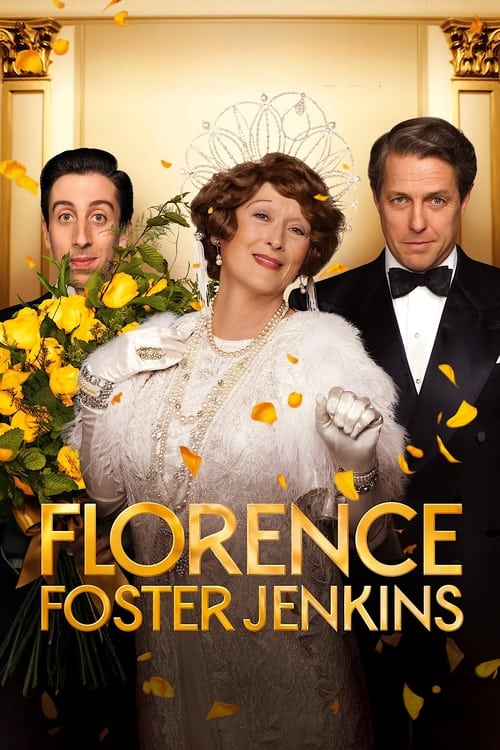
The film follows Florence Foster Jenkins, a wealthy New York socialite who harbors a dream of becoming an opera singer, despite her notoriously poor singing voice. Set in the 1940s, she is supported by her devoted partner, St. Clair Bayfield, who goes to great lengths to keep her delusions intact. The plot chronicles her rise to semi-fame, culminating in a performance at Carnegie Hall, where the contrast between her aspirations and reality becomes painfully evident. It’s a mix of comedy and heartfelt moments, but also skims over the deeper implications of her delusions.
Star Performances, Mixed Support
Meryl Streep delivers a spirited performance as the eccentric Florence, balancing the character's naive ambition with moments of genuine warmth. Hugh Grant, as St. Clair, offers a charming yet slightly underdeveloped portrayal, often overshadowed by Streep's presence. Simon Helberg shines as the timid pianist Cosmè McMoon, providing a fresh counterpoint to Florence’s exuberance. Despite the strong leads, some characters, like Kathleen and Agnes, feel more like plot devices than fully fleshed-out individuals, which dilutes the emotional impact of the ensemble.
Colorful Yet Conventional
Stephen Frears' direction is competent but lacks a bold stylistic flair. The film opts for a pastel color palette and set design that evoke the era, but at times feels overly safe and conventional. The pacing stumbles in parts, particularly during drawn-out sequences that test the audience’s patience. While there are moments of clever editing that capture the absurdity of Florence’s performances, the overall visual storytelling doesn’t elevate the material as it could have, leaving it feeling somewhat flat.
Laughter with a Side of Tedium
Watching Florence Foster Jenkins is a bit of a mixed bag. While the humor emerges from Florence’s outrageous performances, there are moments that drag, particularly during the second act when the story seems to lose steam. The emotional highs are genuine, particularly as Florence faces the reality of her limitations, but the film occasionally veers into repetitiveness, causing a sense of tedium. The bittersweet comedic tone can also feel inconsistent, sometimes leaving the audience unsure whether to laugh or feel sorrow for Florence’s misplaced confidence.
Watch if you liked: The Intern, Saving Mr. Banks









No comments yet. Be the first to share your thoughts!