Genres
Movie Overview & Analysis
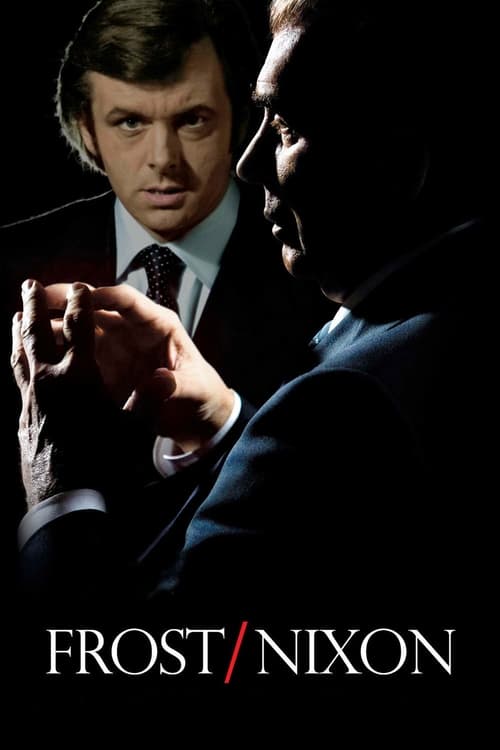
Ron Howard's 'Frost/Nixon' presents a compelling clash of wits between two historical figures, but it struggles to maintain sustained tension throughout. While insightful, the film occasionally stumbles under the weight of its own ambition.
Solid Yet Flawed Historical Drama
In the end, 'Frost/Nixon' delivers a strong exploration of a critical moment in American history, powered by solid performances, particularly from Langella. However, its pacing issues and occasional lack of visual flair lessen its overall impact. It's worth watching for its engaging script and character dynamics, but don't expect a breakneck pace from this political drama.
Film DNA
The radar scores suggest that while the film presents a strong narrative and performances, it lacks visual dynamism and overall entertainment value for repeated viewings.
Pros
- Strong lead performance by Frank Langella
- Engaging dialogue and character dynamics
Cons
- Pacing issues that can drag at times
- Supporting characters feel underdeveloped
For History Buffs Only
This film will likely appeal to history buffs, political drama enthusiasts, and fans of character-driven narratives. Those who enjoy dialogues and tense exchanges will find much to appreciate in Frost and Nixon's verbal sparring. However, viewers who prefer fast-paced plots or action-driven narratives will likely find this film tedious. If you're looking for something light or purely entertaining, you might be left scratching your head. Its cerebral approach might alienate those who are unfamiliar with the historical context surrounding the Watergate scandal or have little interest in political biographies.
Showdown of Words
Set in the summer of 1977, 'Frost/Nixon' chronicles the high-stakes interview between British talk show host David Frost and ex-President Richard Nixon. After being ousted from office, Nixon’s controversial past looms large, particularly the Watergate scandal. Frost, initially doubted by his team for his interviewing prowess, navigates through Nixon's cunning and evasive responses. As the interview unfolds, both men engage in a charged battle of wits that not only seeks to understand Nixon's motivations but also to capture the American public's shifting sentiments. The film intricately balances personal stakes with political commentary, revealing the dramatic implications of this pivotal moment in television history.
Powerful Performances at Play
Frank Langella’s portrayal of Nixon is the standout performance, capturing the ex-president's blend of defiance and vulnerability. He inhabits the role so convincingly that you sometimes forget you're watching an actor. Michael Sheen, while charismatic as David Frost, occasionally feels overshadowed by Langella’s intensity, leaving a sense that his character could have been more fully developed. The rest of the supporting cast, featuring Kevin Bacon and Rebecca Hall, parades through their roles without leaving a lasting impact, despite their considerable talents. Ultimately, while the leads offer strong performances, there are moments where supporting characters fade into the background, missing opportunities to add depth to the narrative.
Howard's Steady Hand
Ron Howard's direction brings a polished yet conventional approach to the film. The cinematography does well to establish the tension of the interviews through close-ups and strategic lighting, reflecting the emotional weight of the exchanges. However, the pacing can feel uneven, particularly in the buildup leading to the climactic interview, which can detract from the overall tension. The reliance on standard dramatic beats sometimes feels formulaic. In a film largely set in studios and boardrooms, you'd expect a clever visual flair; unfortunately, 'Frost/Nixon' mostly plays it safe, which can dull the visceral experience of such a historical confrontation.
A Bumpy Emotional Ride
Watching 'Frost/Nixon' can be both engaging and frustrating. The emotional stakes are highest during the interviews, where Nixon's facade begins to crack, revealing glimpses of the man behind the power. However, the slower moments can drag, occasionally feeling like they stretch out longer than necessary. The film balances its palpable tension with quieter character moments, but these often risk losing the audience’s focus. The emotional resonance fluctuates; while some scenes genuinely hit hard, others feel padded, leading to an overall experience that’s more of a mixed bag than a consistently thrilling ride.
Watch if you liked: The Queen, All the President's Men






No comments yet. Be the first to share your thoughts!