Genres
Movie Overview & Analysis
M. Night Shyamalan's "Glass" attempts to wrap up his quirky superhero trilogy but ultimately feels like a half-baked idea stretched too thin. While it has some intriguing concepts and strong performances, the execution is uneven at best.
A Promising But Incomplete Finale
Overall, "Glass" presents an ambitious conclusion to the trilogy but stumbles in its execution. While it has its moments and some strong performances, the pacing and dialogue issues overshadow its potential.
Film DNA
The radar scores reflect a film that has intriguing concepts and originality but struggles in emotional weight and rewatchability due to pacing issues.
Pros
- James McAvoy's impressive performance
- Interesting themes and character dynamics
Cons
- Pacing issues lead to boredom
- Underdeveloped supporting characters
A Niche Audience
"Glass" might appeal to fans of Shyamalan's previous works and those who enjoy a cerebral take on the superhero genre. However, viewers seeking traditional action or fast-paced storytelling will likely find themselves disappointed. The casual moviegoer might struggle to stay engaged, given the film's slower elements and heavy dialogue. In essence, it's one for those who prefer character-driven stories over blockbuster thrills.
A Complex Web of Characters
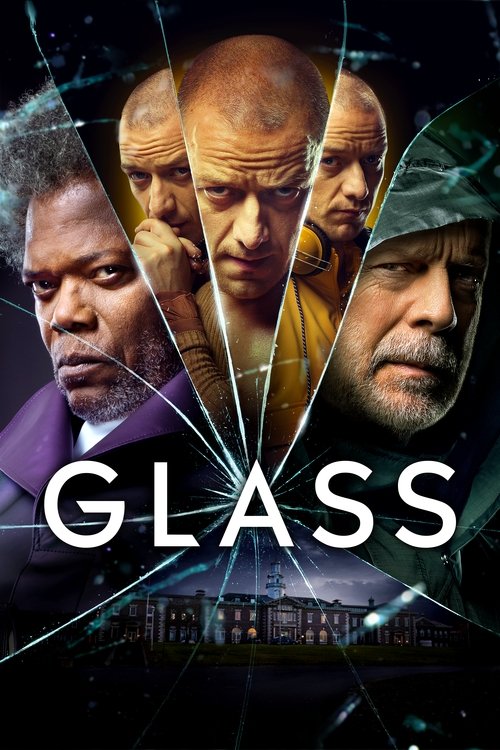
In "Glass", former security guard David Dunn (Bruce Willis) is on a mission to track down Kevin Wendell Crumb (James McAvoy), a man with twenty-four distinct personalities, collectively known as The Horde. As they confront each other, the enigmatic Elijah Price (Samuel L. Jackson) plays a pivotal role, manipulating events from the shadows. The narrative weaves through a psychiatric hospital where Dr. Ellie Staple (Sarah Paulson) aims to convince the trio that they are not superheroes, but mere products of mental illness. The film flirts with interesting themes but bogs itself down in convoluted dialogue and drawn-out scenes.
Performances That Shine and Fade
The performances in "Glass" are generally strong, particularly James McAvoy, who showcases an impressive range with his multiple personas. Bruce Willis returns as David Dunn, but his character feels underused and lacks the depth needed to make a significant impact. Samuel L. Jackson's Elijah Price adds a layer of intrigue but doesn't get enough screen time to make his character feel fully realized. Sarah Paulson's Dr. Staple is a competent addition, yet her role could have used more development, leaving some of the supporting characters feeling flat and underdeveloped.
A Distinct Style with Flaws
M. Night Shyamalan has a distinct style that shines through in "Glass", particularly with his use of color and framing. However, the film suffers from pacing issues, especially during its midsection, where the tension deflates rather than builds. The cinematography is competent but lacks the innovative flair Shyamalan is known for. The visual effects, while not overdone, do not enhance the story as much as they should, leading to a feeling of missed opportunity when it comes to showcasing the characters' powers.
Slow Moments, Missed Opportunities
Watching "Glass" can often feel like a tedious exercise in patience. The slow pacing and drawn-out dialogue can lead to moments of frustration, especially when the expected action sequences are kept at bay. Shyamalan's tendency to explain every little detail also robs the film of some of its mystery. While there are emotional highs, particularly in the relationship between Casey Cooke (Anya Taylor-Joy) and Kevin, the overall experience can feel more like a chore than an engaging watch as the plot meanders without clear direction.
Watch if you liked: Split, Unbreakable
No comments yet. Be the first to share your thoughts!