Genres
Movie Overview & Analysis
K-PAX tries to blend science fiction with human psychology but often finds itself lost in its own ambiguity. While it offers intriguing concepts, the execution leaves a lot to be desired.
Good Ideas, Lost Execution
K-PAX presents an interesting premise with some strong performances but gets bogged down by pacing issues and underdeveloped characters. It’s a film that could have benefited from tighter editing and a clearer direction. In the end, it’s a thought-provoking piece but also a somewhat tedious one.
Film DNA
The scores suggest K-PAX has some originality and depth but suffers in emotional weight and rewatchability, indicating an uneven viewing experience.
Pros
- Compelling performances by Spacey and Bridges
- Intriguing premise that invites reflection
Cons
- Pacing issues lead to moments of tedium
- Underdeveloped supporting characters
For Philosophers, Not Everyone
K-PAX may appeal to viewers who enjoy cerebral films that challenge perceptions of reality and explore themes of mental illness. However, those who prefer straightforward narratives with clear resolutions might find themselves frustrated by its ambiguity and slow pacing. Fans of Kevin Spacey and Jeff Bridges might still appreciate their performances, but casual viewers could easily lose interest in the prolonged introspective dialogues and lack of narrative focus.
An Alien Among Us
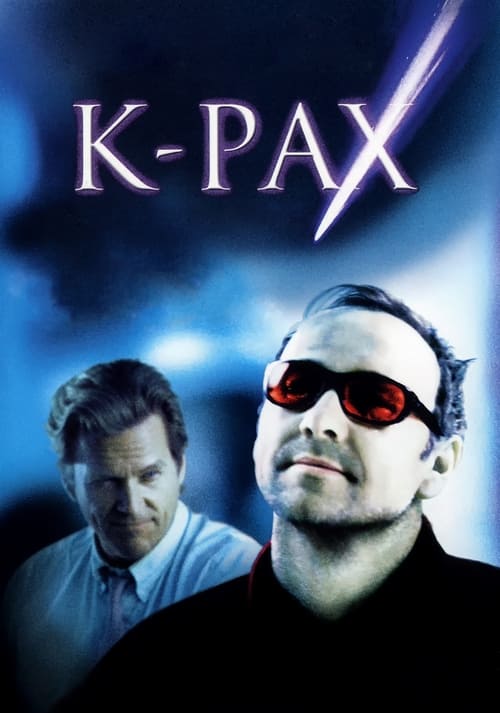
The film centers around Prot, played by Kevin Spacey, a patient in a mental health facility who insists he’s from the distant planet K-PAX. Dr. Mark Powell, portrayed by Jeff Bridges, becomes captivated by Prot’s claims and starts to question his own rationality. As their sessions unfold, the lines between reality and delusion blur, inviting the audience into a web of uncertainty regarding mental illness, identity, and faith. Despite its ambitious premise, the movie often meanders without fully committing to a coherent narrative.
Spacey Shines, Others Fade
Kevin Spacey delivers a performance that is both charming and unsettling, successfully embodying the enigmatic Prot. Jeff Bridges, as Dr. Powell, provides a solid counterpart, but at times his character feels too conventional and lacks depth. Other characters, such as Alfre Woodard’s Claudia, are underutilized, serving mostly as backdrop rather than catalysts in the narrative. The supporting cast shines sporadically, but their potential is often squandered in a story that focuses too heavily on its leads, leaving little room for character development.
Visuals That Miss the Mark
Iain Softley’s direction oscillates between engaging and muddled, with some scenes that effectively create a dreamlike quality while others drag the pacing. The film's visual style is largely standard for the early 2000s, with muted colors that mirror the somber themes. However, the cinematography lacks the innovation that could have elevated its premise. Moments of potential intrigue are often lost in overlong sequences that test viewers’ patience, leading to a disjointed viewing experience that feels far from the ambitious concept it seeks to present.
Thoughts That Drift
Watching K-PAX can feel like a mixed bag. The film attempts to delve into deep emotional and philosophical questions, but it often feels surface-level and overly drawn out. As the plot unfolds, there are moments that genuinely provoke thought and introspection, but these are frequently punctuated by stretches of boredom. The pacing stumbles around the middle, making it difficult to remain fully engaged. By the time the climax rolls around, what should be a cathartic resolution often feels more like a forced conclusion to a meandering journey.
Watch if you liked: The Good Night, Summerdream
No comments yet. Be the first to share your thoughts!