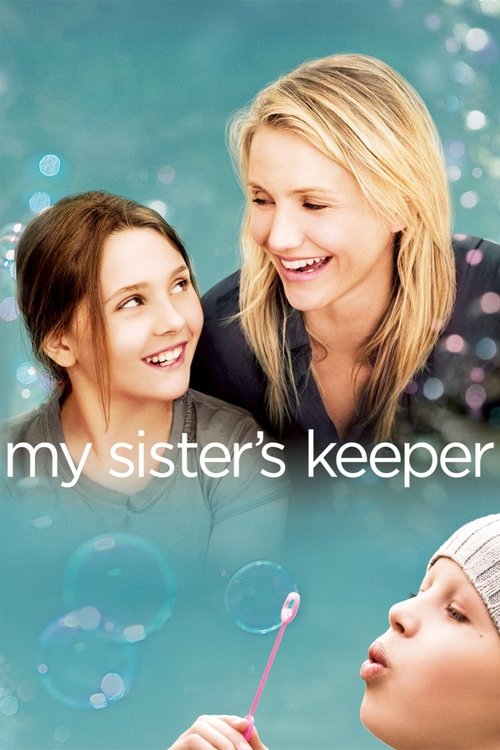
Genres
Movie Overview & Analysis
My Sister's Keeper treads familiar emotional territory but offers enough intrigue to keep you engaged. The film dives into heavy themes that can be both rewarding and frustrating.
A Mixed Bag of Emotions
My Sister's Keeper offers a mix of thought-provoking moments and emotional highs but is ultimately let down by pacing issues and underdeveloped characters. It’s worth a watch for those interested in its themes, but don't expect a flawless execution.
Film DNA
The radar scores reflect a film with solid story depth and emotional weight but suffer from pacing issues and lack of visual flair. It’s engaging but not particularly rewatchable or innovative.
Pros
- Strong performances, particularly by Cameron Diaz and Abigail Breslin
- Intriguing ethical dilemmas that prompt reflection
Cons
- Pacing issues detract from emotional impact
- Some characters feel underdeveloped or sidelined
Target Audience and Discontents
This film is primarily aimed at those who enjoy family dramas rife with moral complexity. Viewers who appreciate stories that grapple with ethical dilemmas and emotional struggles might find value here. However, those looking for a fast-paced narrative or a straightforward story will likely be disappointed; its slow burn might wear thin for audiences craving action or humor. Additionally, if you’re not a fan of films that make you feel the weight of familial obligation and sacrifice, you might want to steer clear. Overall, it's a film that demands patience and emotional investment.
Family Ties and Ethical Dilemmas
Sara (Cameron Diaz) and Brian Fitzgerald (Jason Patric) seem to have a perfect family until their daughter Kate (Sofia Vassilieva) falls gravely ill with leukemia. To ensure Kate's survival, they make a controversial decision to conceive another child, Anna (Abigail Breslin), designed to be a genetic match for her sister. This ethical dilemma plunges the family into a courtroom battle as Anna seeks medical emancipation from her parents, questioning the sacrifices made in the name of love. The story unfolds through a blend of melodrama and ethical exploration, ultimately leading to a bittersweet resolution that forces the characters and viewers alike to grapple with the true meaning of love and sacrifice.
Performances in Ethical Quagmires
Cameron Diaz delivers a surprisingly strong performance as the desperate mother Sara, showing depth in her emotional turmoil. Abigail Breslin shines as Anna, embodying a sense of maturity that belies her age. However, some characters feel underdeveloped, particularly Jason Patric's Brian, whose role often takes a back seat to the more central maternal conflict. Alec Baldwin's portrayal of the lawyer Campbell Alexander is solid but doesn't add much to the emotional stakes. The uneven character development might leave viewers wanting more from certain arcs, especially from Kate, who often vanishes into the background despite her critical role in the family's strife.
Pacing Problems and Visual Choices
Nick Cassavetes directs with a steady hand, but the pacing can feel sluggish at times. The visual choices evoke a somber tone, aligning well with the film's heavy subject matter, but the over-reliance on close-ups can veer into melodramatic territory. The editing is a mixed bag; some scenes drag on unnecessarily while others feel rushed, as if key moments were cut to fit runtime constraints. While the cinematography captures the emotional landscape effectively, it lacks variety, often recycling similar shots that can detract from the impact of pivotal scenes. Overall, the direction achieves its goals but doesn’t creatively push the envelope.
Emotional Weight and Frustration
Watching My Sister's Keeper is an emotional endeavor, though it has its fair share of dull moments. The film tries to balance the heavy themes of love, sacrifice, and family dynamics, which often results in an uneven emotional experience. While some scenes hit hard, others feel like filler, dragging out the runtime without adding value. The court scenes, meant to heighten tension, sometimes come off as predictable and cliché, dulling the impact of the ethical dilemmas presented. The conclusion might resonate with some viewers, yet others might find it frustratingly ambiguous, leaving them more annoyed than moved. Ultimately, it’s a mixed bag of emotions.
Watch if you liked: The Fault in Our Stars, A Walk to Remember




No comments yet. Be the first to share your thoughts!