Genres
Movie Overview & Analysis
With 'Nuremberg', director James Vanderbilt serves up a historical drama that aims to dissect the moral complexities of the infamous war crimes trials. However, even with a strong cast, it manages to stumble in pacing and emotional engagement.
A Strong Effort, Yet Flawed
'Nuremberg' presents a weighty historical narrative with commendable performances, but its flaws in pacing and underdevelopment can leave viewers feeling disengaged. While it has its strengths, it ultimately falls short of its ambitious potential.
Film DNA
The radar scores indicate a film with considerable depth and originality, though it struggles with emotional engagement and rewatch value. While it has its merits, the entertainment factor leaves something to be desired.
Pros
- Strong performances from the leads
- Intriguing historical context
Cons
- Pacing issues that drag in parts
- Underdeveloped supporting characters
Target Audience Insights
'Nuremberg' will likely resonate with history buffs and those interested in the moral quandaries of war crimes, but casual viewers might find it plodding and dense. If you dislike slow-burn narratives that demand your full attention and patience, this film will probably frustrate you. The heavy themes and stark visuals may also alienate those looking for lighter fare. However, for those who appreciate a cerebral exploration of ethical dilemmas and the historical context of the Nuremberg Trials, the film offers substantial food for thought.
A Psychiatrist's Dilemma
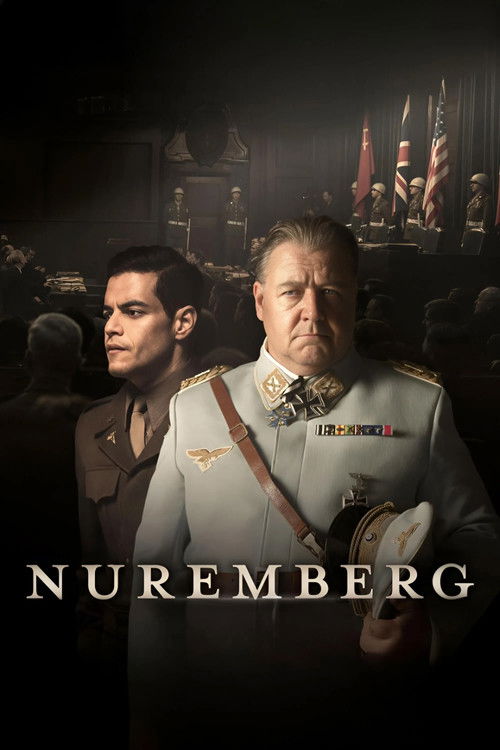
'Nuremberg' takes place in post-World War II Germany, focusing on American psychiatrist Douglas Kelley, portrayed by Rami Malek. He is tasked with assessing the mental fitness of Nazi prisoners, including the notorious Hermann Göring, played by Russell Crowe. The film dives into the intricate battle of ethics and intellect between Kelley and Göring, set against the backdrop of the Nuremberg Trials, a critical historical moment where justice seeks to confront the horrors of the Holocaust. While the premise holds tremendous potential, the film sometimes feels bogged down by its own heavy themes, leaving viewers yearning for more nuanced exploration.
Casting Choices and Performances
Rami Malek delivers a solid performance as Douglas Kelley, effectively portraying the psychiatrist's internal conflict. Russell Crowe, as Göring, is menacing but sometimes slips into caricature, failing to fully convey the complexities of his character. Michael Shannon as Justice Robert H. Jackson adds a layer of gravitas, though some supporting roles feel underdeveloped, overshadowed by the weight of the leads. Characters like Colonel Burton Andrus and Dr. Gustave Gilbert, played by John Slattery and Colin Hanks respectively, lack depth and screen time, contributing to an uneven ensemble that detracts from the film's dramatic potential.
Historical Aesthetics and Direction
James Vanderbilt’s direction brings a somber, period-appropriate tone to the film, capturing the stark realities of post-war Germany. However, the pacing often falters, especially in the mid-section where scenes drag and lose momentum. Visually, the film utilizes a muted color palette, which effectively reflects the grim subject matter but can feel monotonous over its lengthy runtime. The editing choices occasionally disrupt the narrative flow, making it hard for the audience to maintain engagement during key moments. A more dynamic approach to visual storytelling could have elevated the impact of the film.
A Mixed Emotional Experience
Watching 'Nuremberg' is a mixed bag of rousing drama and moments of tedium. While the historical significance of the subject matter should provoke strong feelings, the film often succumbs to long-winded dialogues and drawn-out courtroom scenes that can induce fatigue. There are flashes of emotional depth, particularly in Kelley’s interactions with Göring, but these moments are too infrequent to sustain viewer interest throughout the film's nearly 150-minute runtime. As a result, the emotional weight feels somewhat diluted by unnecessary filler.
Watch if you liked: Judgment at Nuremberg, The Reader








No comments yet. Be the first to share your thoughts!