Genres
Movie Overview & Analysis
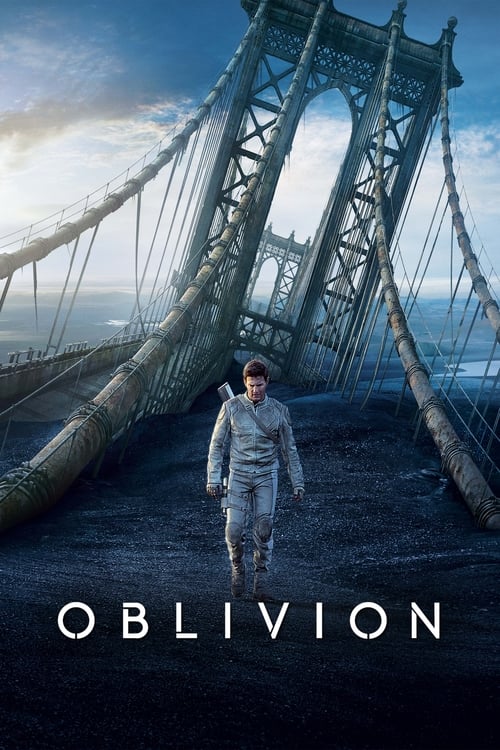
Oblivion is a visually striking sci-fi film that tries to marry action with philosophical themes. While it has some intriguing concepts, it often feels bogged down by its own ambition.
Set in a post-apocalyptic future, Oblivion follows Jack Harper, a drone repairman played by Tom Cruise, who is one of the last humans on Earth. He is tasked with extracting resources after decades of war against a mysterious enemy known as the Scavs. The plot thickens when Jack rescues a woman from a crashed spacecraft, leading him to question the reality of his mission and the fate of humanity. As he unravels secrets about his world and himself, the film’s pacing falters, dragging through moments that could have been more engaging. The overarching narrative, while ambitious, sometimes feels convoluted and clichéd.
Tom Cruise delivers a solid performance as Jack, but the character often feels underdeveloped and a bit one-note. Morgan Freeman shines as Beech, bringing gravitas to a role that could have easily been forgettable. Olga Kurylenko as Julia has a captivating presence, but her character is frustratingly underutilized, leaving the audience wanting more depth. The supporting cast, including Andrea Riseborough as Victoria, adds layers to the film but often feels like they’re merely existing in Jack’s shadow rather than having their own arcs. The overall characterization suffers from the film's tendency to prioritize visuals over character development.
Joseph Kosinski’s direction is visually impressive, showcasing stunning landscapes and sleek technology that create a striking aesthetic. The cinematography captures the desolation of Earth beautifully, but it sometimes sacrifices narrative coherence for style. The pacing is uneven, with long stretches that feel drawn out, especially in the first act. Though the visual effects are well-executed, there's a sense that they overwhelm some of the storytelling aspects. The film could have benefited from a tighter edit to maintain engagement, as the pacing issues lead to moments of disconnect between spectacle and substance.
Watching Oblivion is a mix of awe and frustration. The film occasionally evokes a sense of wonder with its visuals and expansive world-building. However, it often drags during slow-paced scenes, making it easy to lose interest. The emotional beats that should resonate fall flat at times, largely due to the film's tendency to rely heavily on its visual style rather than deepening character relationships. With a runtime of over two hours, there are segments that could have been trimmed to enhance the overall experience, which left me feeling slightly detached despite the film's ambition.
Oblivion appeals to viewers who enjoy sci-fi with a philosophical bent and are keen on visual aesthetics. Fans of Tom Cruise might find some value in his performance, but those who prefer fast-paced, action-driven narratives might find themselves bored. If you dislike films that prioritize style over substance or require character depth, you likely won't enjoy this one. It's also not ideal for those wanting clear-cut answers, as the film leaves many questions lingering, which could be frustrating to some audiences.
Oblivion presents an intriguing concept with significant visual flair but struggles under the weight of its pacing issues and character development. While it offers some entertainment value, the film is a classic case of looking great but feeling hollow in places. If you're willing to overlook its flaws for the sake of its visuals, it might still be worth your time.
Film DNA
The film scores well on visual impact and originality, but its emotional weight and story depth leave much to be desired. With average rewatchability, it doesn't quite resonate as a must-see.
No comments yet. Be the first to share your thoughts!