Genres
Movie Overview & Analysis
Still Alice presents a poignant look at the early onset of Alzheimer's through the lens of a distinguished professor. While it excels in emotional depth, it occasionally stumbles in pacing and character development.
A Strong 8 Out of 10
While it shines in its emotional authenticity and Moore's performance, Still Alice suffers from pacing issues and underdeveloped characters. It's an impactful film, but the weight of its subject matter might not appeal to everyone.
Film DNA
The scores reflect a film rich in emotional depth but uneven in pacing and character development, making it a solid watch but not necessarily a repeat one.
Pros
- Julianne Moore's powerful performance
- Emotional resonance in key scenes
Cons
- Pacing issues in the second act
- Supporting characters feel underdeveloped
Perfect for Drama Lovers
Still Alice caters to viewers who appreciate character-driven dramas and are willing to engage with weighty themes surrounding illness and loss. Those who prefer fast-paced storytelling or action-packed narratives will likely find it tedious. Fans of Julianne Moore will certainly enjoy her heartfelt performance, but the film's slow burn might alienate those looking for traditional entertainment. It's a thoughtful watch, best suited for those ready for a deep dive into the complexities of mental decline.
A Life Unraveled
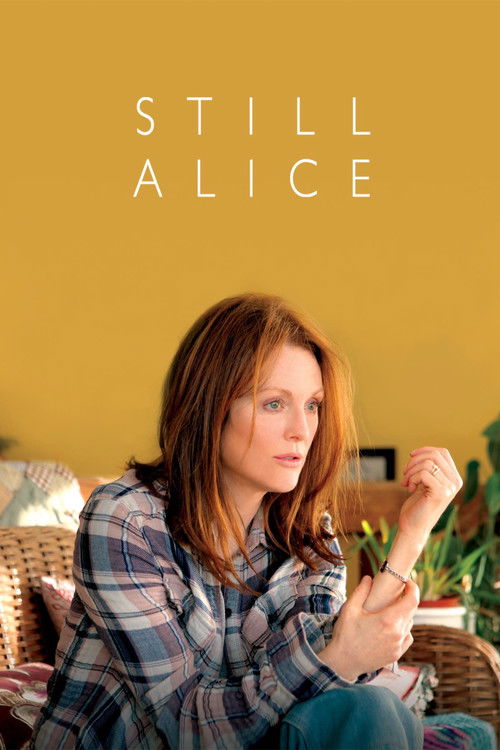
Alice Howland, played by Julianne Moore, is a respected linguistics professor at Columbia University who appears to have it all: a successful career and a loving family. However, her life takes a tragic turn when she begins to forget words and is diagnosed with early-onset Alzheimer's disease. The film chronicles the chaos that ensues as Alice's memory deteriorates, along with the emotional strain on her husband, John (Alec Baldwin), and their three children. As the family struggles to adapt, we see their bonds both strengthen and fray in this heartrending exploration of loss and love.
Performances That Hit Hard
Julianne Moore delivers a compelling performance as Alice, capturing the character's gradual decline with a raw authenticity that won her an Academy Award. Alec Baldwin holds his own as her supportive husband, but at times, his character feels underdeveloped compared to Alice's. The supporting cast, including Kristen Stewart as the estranged daughter Lydia, adds layers, but they often feel like background characters rather than fully realized individuals. This unevenness in character development can distract from the central narrative and leave viewers craving more depth in the family's interactions.
Simple Yet Effective Style
Directed by Richard Glatzer, Still Alice opts for a subtle, intimate approach rather than flashy visual techniques. The cinematography effectively captures the shifting reality of Alice’s world, with close-ups that draw you into her emotional turmoil. However, the pacing tends to drag in certain segments, making the viewer acutely aware of the film's runtime. Some scenes feel like they stretch out longer than necessary, which can hinder the film's overall impact. A tighter edit could have enhanced the emotional resonance and kept the audience more engaged.
Heavy but Drags at Times
Watching Still Alice is undoubtedly a heavy experience, marked by moments of heartbreak and frustration. The film succeeds in evoking empathy, especially in scenes where Alice struggles to articulate her thoughts. Yet, it also invites feelings of boredom during its slower stretches, where the narrative seems to stall. The emotional weight is palpable, yet the uneven pacing can detract from the overall journey. It’s a film that makes you reflect, but it also occasionally tests your patience.
Watch if you liked: The Theory of Everything, A Beautiful Mind








No comments yet. Be the first to share your thoughts!