Genres
Movie Overview & Analysis
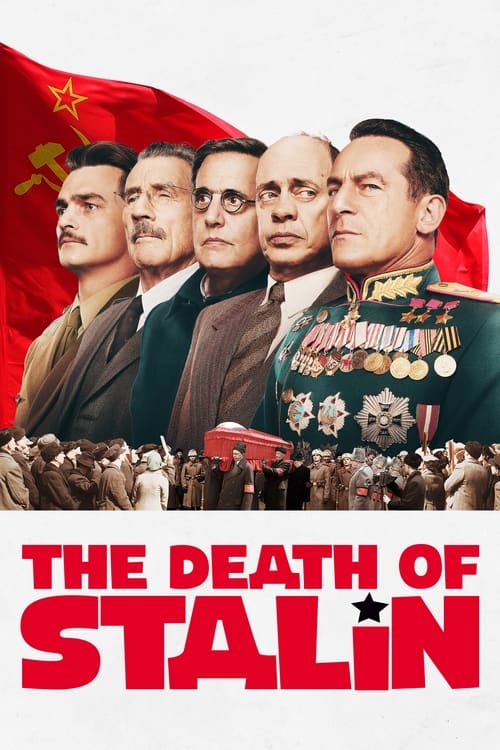
The Death of Stalin is an intriguing blend of dark comedy and historical events. Its portrayal of power struggles following Stalin's death showcases both the absurdity and brutality of political maneuvering.
A Unique Historical Comedy
The Death of Stalin is an engaging mix of comedy and political commentary that navigates the absurdities of power struggles effectively. While it may not resonate with everyone, its unique take on a dark chapter in history makes it a worthwhile watch.
Film DNA
The radar scores reflect a strong narrative and originality, with good entertainment value. However, emotional impact and rewatchability are moderate, showing some limitations.
Pros
- Sharp and witty dialogue
- Strong cast chemistry
Cons
- Some characters feel underutilized
- Pacing may feel uneven for some
Ideal for Satire Lovers
This film is tailored for viewers who appreciate dark humor and political satire. Fans of films like In the Loop or Veep will likely enjoy Iannucci's signature style. However, those who prefer straightforward historical dramas or lighter comedies may find it off-putting. The Death of Stalin is best suited for an audience willing to engage with its sharp social commentary and embrace its blend of humor and historical context.
Power Struggles in Chaos
Set in the chaotic aftermath of Joseph Stalin's death, the film dives into the scramble for power among his inner circle. Characters like Nikita Khrushchev and Lavrenti Beria engage in backstabbing, brawls, and comical blunders as they try to establish dominance. The narrative is peppered with biting humor that exposes the ridiculousness of authoritarian politics, all while touching on the serious implications of their actions. As tensions rise, the film asks who truly holds the reins of power in a government rife with paranoia and incompetence.
Strong Cast Dynamics
The performances in The Death of Stalin stand out for their sharp comedic timing and commitment to their roles. Steve Buscemi shines as Khrushchev, bringing a mix of wit and desperation to the character. Simon Russell Beale's portrayal of Beria is equally impressive, capturing the sinister nature of his ambitions. However, some characters, like Jeffrey Tambor's Malenkov, feel underused despite their potential for humor and depth. Overall, the cast works well together, balancing absurdity with the film's dark themes.
Satirical Visual Storytelling
Director Armando Iannucci employs a sharp, satirical style that fits the film's bleak yet humorous tone. The cinematography captures the oppressive atmosphere of Soviet-era Moscow, using dim lighting and tight framing to emphasize the characters' paranoia and scheming. Iannucci's direction blends historical authenticity with exaggerated comedic elements, making the absurdity of the political landscape both amusing and unsettling. The pacing maintains an engaging rhythm, keeping the audience invested in the characters’ chaotic interactions.
Humor Meets Historical Gloom
Watching The Death of Stalin elicits a mix of laughter and discomfort. The absurdity of the characters' actions against a backdrop of historical atrocity creates a unique atmosphere where humor and tragedy coexist. While the film is filled with sharp one-liners and ridiculous scenarios, it never loses sight of the underlying tension and fear that defined the period. The emotional impact might leave some viewers reflecting on the harsh realities of power, while others may simply enjoy the absurdity of it all.
Watch if you liked: In the Loop, Veep


No comments yet. Be the first to share your thoughts!