Genres
Movie Overview & Analysis
The Place Beyond the Pines is a film that ambitiously intertwines the lives of its characters, yet struggles with pacing that sometimes drags the emotional impact. While it has some strong performances, it ultimately falters in its execution and narrative coherence.
A Film of Lost Potential
The Place Beyond the Pines has its moments of brilliance and strong performances that keep it afloat, but its narrative pacing and some underdeveloped characters hold it back from being truly impactful. It's worth a watch, especially for fans of the genre, but don't expect a seamless experience.
Film DNA
The scores reflect a film with solid originality and depth but hindered by pacing and emotional delivery issues. It's engaging enough for a one-time watch, but rewatchability suffers.
Pros
- Strong performances from the leads
- Unique narrative structure
Cons
- Pacing issues throughout
- Some underdeveloped characters
A Slow Burn for Some
This film may resonate with those who appreciate slow-burning narratives and character-driven dramas. Fans of Ryan Gosling and Bradley Cooper are likely to find value in their performances, but those looking for a fast-paced thriller will likely hate it. Its heavy themes and complex storytelling might appeal to viewers who enjoy films that require contemplation, while those seeking straightforward entertainment should look elsewhere.
Criminal Choices and Consequences
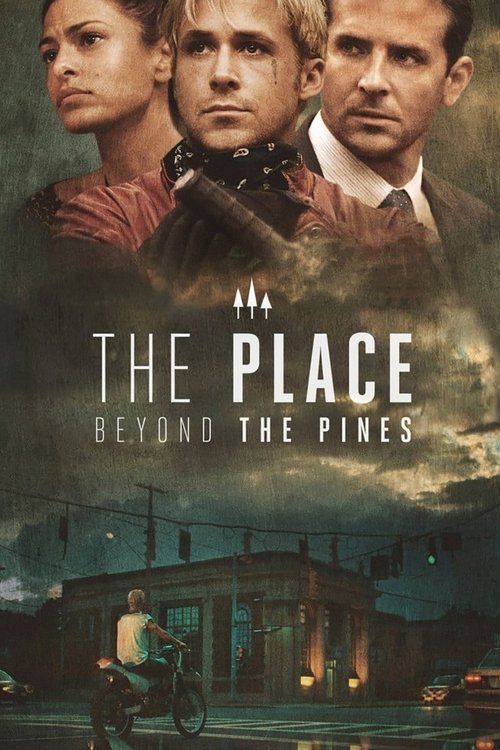
At the center of The Place Beyond the Pines is Luke Glanton, a motorcycle stunt rider played by Ryan Gosling, who turns to a life of crime to support his estranged family. His choices lead him to cross paths with Avery Cross (Bradley Cooper), a rookie cop whose own life is forever altered by the events that unfold. The film branches out across generations, exploring the consequences of their actions and how they affect their children, creating a multilayered narrative. However, this ambitious structure sometimes feels disjointed, leaving the audience to navigate a complex web of relationships and themes that can feel overwhelming at times.
Performances with Mixed Depth
Ryan Gosling delivers a standout performance as Luke, capturing the character's desperation and vulnerability. Bradley Cooper, as Avery, provides a solid contrast, though his character feels underdeveloped in the latter part of the film. Eva Mendes does well as Romina but is often reduced to a secondary role, which undermines her potential. Supporting characters, including Ray Liotta as the morally dubious Deluca, add depth, but some feel like they barely scratch the surface. Ultimately, while the central performances are commendable, the film could have benefited from a more balanced character development across the board.
Gritty Style, Slow Pacing
Derek Cianfrance's directing style is gritty and raw, which suits the film's themes well. The visuals, characterized by a muted color palette and long takes, create an atmospheric tension that enhances the emotional weight. However, some sequences drag on longer than necessary, leading to moments where the audience might lose interest. The editing, particularly in the transition between the different timelines, can be jarring, leaving viewers disoriented rather than engaged. While the intention behind these choices is clear, stronger pacing and clearer transitions could have elevated the film significantly.
Heartfelt Yet Draining
Watching The Place Beyond the Pines is an emotional rollercoaster, and yet it can also be a test of patience. The film grapples with heavy themes of legacy and consequence, but the pacing often saps some of its emotional potency. There are moments of genuine heartache, particularly in the father-son relationships, but the drawn-out sequences can lead to boredom. The film's desire to explore the intricacies of its narrative can sometimes overshadow the more intimate moments it strives for, leaving viewers in a space of frustration rather than connection.
Watch if you liked: Blue Valentine, Drive
No comments yet. Be the first to share your thoughts!