Genres
Movie Overview & Analysis
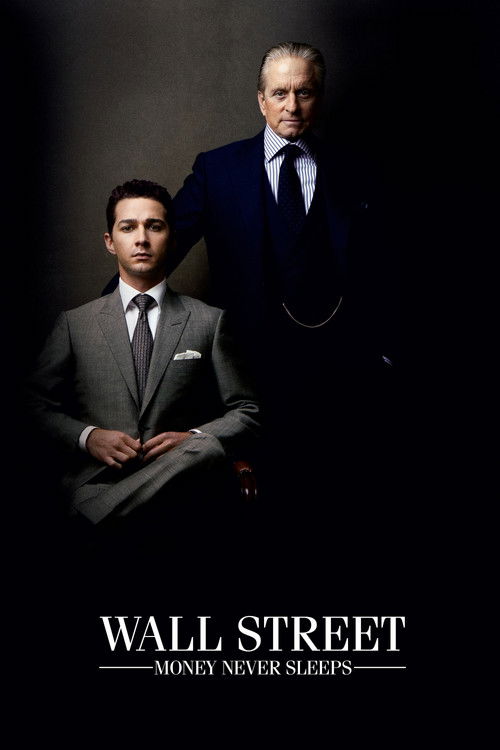
Oliver Stone's 'Wall Street: Money Never Sleeps' offers a modern look at the financial world through the eyes of a young trader. The film serves as both a cautionary tale and a drama about ambition, love, and betrayal in the pursuit of wealth.
A Thoughtful Look at Ambition
Overall, 'Wall Street: Money Never Sleeps' offers a thoughtful exploration of ambition in the financial world. While it has its flaws, particularly in pacing and character development, the film provides valuable insights for those willing to engage with its themes.
Film DNA
The radar scores reflect a film that offers a solid narrative depth and visual style, though emotional engagement and rewatchability may fall short for some viewers.
Pros
- Strong performances, especially from Douglas and Brolin.
- Engaging cinematography that reflects the financial world.
Cons
- Some characters feel underdeveloped.
- Pacing issues occasionally disrupt the narrative flow.
Intellectual Audience Appeal
This film will likely appeal to audiences interested in financial dramas, especially those who appreciate a more cerebral narrative filled with ethical dilemmas. Fans of the original 'Wall Street' will find nostalgia in Gekko's return, while younger viewers might be drawn to the personal conflicts that resonate with contemporary issues. However, those looking for a straightforward crime thriller or fast-paced action may want to skip it, as the film leans more towards dialogue-heavy scenes and moral quandaries rather than action sequences. Still, it's worth a watch for anyone keen on understanding the complexities of ambition and greed.
Financial Crisis Unfolds
Set against the backdrop of a financial crisis, the film follows Jacob Moore, a young Wall Street trader, who teams up with the infamous Gordon Gekko, played by Michael Douglas. Jacob aims to uncover the truth behind his mentor's death while alerting the financial community about an impending economic collapse. As Jacob navigates the cutthroat world of finance, tensions rise between him and Bretton James, a rival financier, while the complexities of family relationships deepen through Gekko's estranged daughter, Winnie. The intertwining personal and professional conflicts make for a rich narrative that highlights the consequences of ambition and greed.
Solid Performances All Around
Michael Douglas reprises his iconic role as Gordon Gekko, delivering a performance that balances charm and menace. Shia LaBeouf as Jacob Moore brings youthful energy and vulnerability to the character but often feels overshadowed by the veteran actors. Carey Mulligan, as Gekko's daughter Winnie, adds layers to the family dynamics but is occasionally underutilized. Josh Brolin plays Bretton James with a convincingly arrogant demeanor, making him a fitting adversary. While the cast performs well overall, some characters, like Frank Langella’s Lewis Zabel, could have been more fleshed out to enhance the emotional stakes.
Cinematic Style Choices
Oliver Stone's direction maintains a frenetic pace, suitable for the high-stakes world of Wall Street. The film’s visual style combines sleek cityscapes and quick cuts, which reflects the chaotic nature of financial markets. Stone effectively uses color grading to create a distinct mood, with cooler tones during moments of tension and warmer hues in personal scenes. However, some editing choices can feel disjointed, potentially pulling viewers out of the narrative flow. The cinematography captures both the glamour and the grit of financial life, providing a visually engaging experience that aligns with the film's themes.
Tension Meets Introspection
Watching 'Wall Street: Money Never Sleeps' evokes a mix of anxiety and intrigue as it portrays the highs and lows of financial ambition. The film's exploration of personal relationships interwoven with economic ambition adds depth, but it can sometimes feel heavy-handed in its cautionary message. The emotional impact is strongest in scenes involving Jacob and Winnie, where personal stakes are laid bare, yet other moments feel more like a lecture on financial ethics rather than organic storytelling. The overall atmosphere balances tension with moments of introspection, crafting an engaging experience for viewers who appreciate character-driven dramas.
Watch if you liked: The Big Short, Margin Call


No comments yet. Be the first to share your thoughts!