Genres
Movie Overview & Analysis
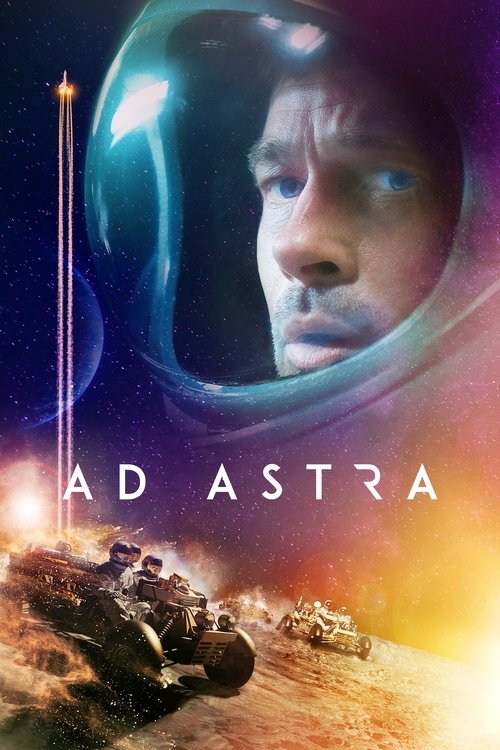
Ad Astra presents a contemplative take on space exploration, with emotional stakes tethered to personal relationships. While it features stunning visuals and a solid performance by Brad Pitt, the film's pacing might test some viewers' patience.
A Journey Worth Taking
Ad Astra offers a thought-provoking exploration of space and the human experience, highlighted by Brad Pitt’s strong performance and stunning visuals. While its slow pacing might deter some, those who appreciate a deeper narrative will likely find it rewarding.
Film DNA
The radar scores indicate a strong visual impact and originality, though the emotional weight and entertainment value may vary for viewers. Story depth shines through despite some pacing issues.
Pros
- Strong performance by Brad Pitt
- Stunning visuals and cinematography
Cons
- Slow pacing may lose some viewers
- Underutilized supporting characters
For Thoughtful Sci-Fi Fans
'Ad Astra' is likely to appeal to fans of character-driven science fiction that prioritizes emotional storytelling over action. Viewers who enjoyed films like '2001: A Space Odyssey' or 'Interstellar' may find much to appreciate here. However, those looking for a fast-paced thrill ride or conventional space battles might want to skip this one. Its cerebral nature and deliberate pacing cater more to an audience willing to engage with themes of isolation and the human condition rather than pure entertainment.
A Journey Through Space and Emotion
Set in a not-so-distant future, 'Ad Astra' follows astronaut Roy McBride (Brad Pitt), who embarks on a perilous mission across the solar system to find his missing father, H. Clifford McBride (Tommy Lee Jones), whose reckless expedition may hold the key to Earth’s survival. As Roy navigates the vastness of space, he confronts not only external dangers but also his own feelings of isolation and loss, which are magnified by the emotional burden of his father’s legacy. The film effectively blends elements of science fiction with a deeply personal narrative, exploring themes of grief, connection, and the quest for meaning in the infinite void.
Pitt Shines, Others Fade
Brad Pitt delivers a restrained yet effective performance as Roy McBride, capturing the character's internal conflict and emotional turmoil with subtlety. Tommy Lee Jones, though pivotal to the plot, is somewhat underutilized, appearing only in flashbacks and visions. Liv Tyler’s role as Eve offers brief yet poignant moments, emphasizing the personal stakes for Roy. Other supporting characters like Ruth Negga as Helen Lantos and Donald Sutherland as Thomas Pruitt provide solid contributions, though their arcs feel somewhat limited within the broader narrative.
Contemplative Style and Aesthetics
James Gray’s direction exhibits a contemplative style, favoring introspective moments over high-octane space action. The visual composition is striking, with vast, empty landscapes of space juxtaposed against intimate, close-up shots of Roy’s face, enhancing the film's themes of isolation. The cinematography by Hoyte van Hoytema employs a muted color palette that reflects the film's somber tone. While the visuals are undeniably impressive, some may find the slow pace and minimal action sequences challenging, detracting from the overall experience.
Melancholy and Reflection
Watching 'Ad Astra' evokes feelings of melancholy and introspection, as it invites viewers to consider the weight of father-son relationships and the loneliness of exploration. The film’s quiet moments allow for reflection, and Pitt’s performance encapsulates a sense of vulnerability. However, the slow pacing and reflective tone might not resonate with everyone, potentially leading to a disconnect as the narrative unfolds. Overall, it’s a film that requires patience but rewards viewers who appreciate its emotional depth.
Watch if you liked: Interstellar, 2001: A Space Odyssey








No comments yet. Be the first to share your thoughts!